
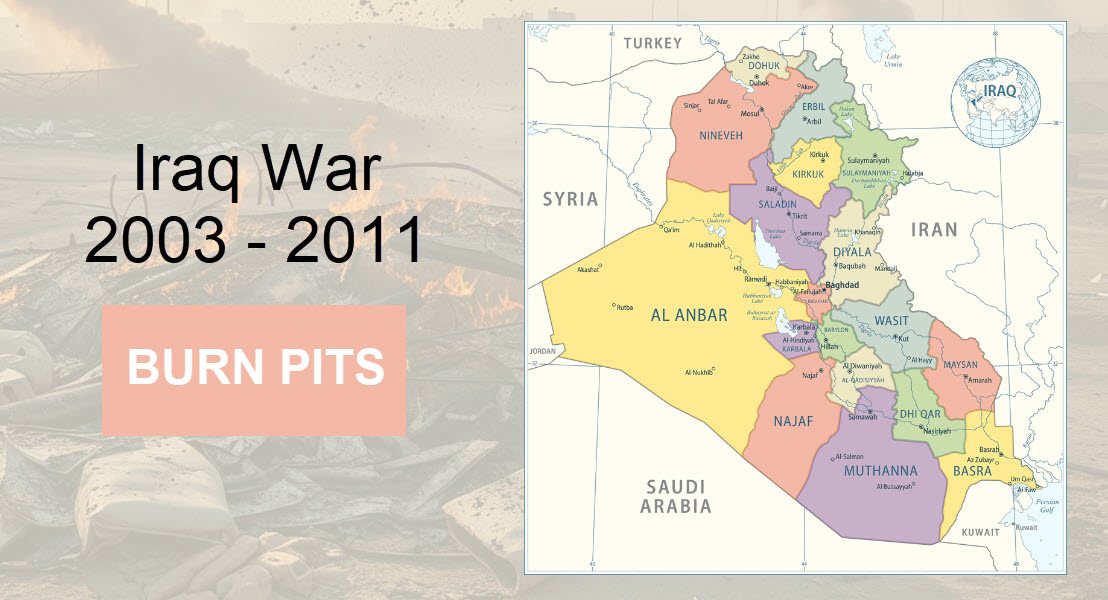
Many soldiers stationed in Iraq were likely exposed to toxic smoke from burn pits—massive open-air fires the U.S. military used to dispose of waste. Burn pits in Iraq were used to get ride of waste like plastics, paint, tires, batteries, chemicals, and even human waste. The fires were often started using jet fuel (JP-8), which itself contains hazardous compounds.
When this waste was burned, the smoke released a dangerous mix of chemicals into the air—chemicals that service members breathed in every day, often without knowing the risks.
Current Research
Today, researchers and lawmakers alike are recognizing what veterans have been saying for years: exposure to burn pit toxins has been linked to serious, long-term health problems, including respiratory diseases, cancers, and immune system disorders.
Many of these conditions are now classified by the VA as “presumptive,” meaning the VA presumes the condition was caused by military service. This designation allows affected veterans to qualify for VA disability compensation without needing to prove a direct link—a major win for those suffering from exposure-related illnesses.
The War in Iraq (2003 – 2011)
The U.S. military presence in Iraq began with Operation Iraqi Freedom (OIF) in March 2003, when a coalition led by the United States invaded Iraq to remove Saddam Hussein’s regime. The initial phase was a fast-moving ground war that led to the fall of Baghdad by April 2003.
After that, the mission shifted from active combat to a longer-term presence aimed at counterinsurgency, rebuilding, and security. This meant thousands of service members lived and worked at large, semi-permanent bases for months or even years.
Approximately 1.5 million U.S. service members were deployed to Iraq during the conflict, with peak troop levels hitting around 170,000 in 2007.
These troops were stationed at hundreds of military bases, forward operating bases (FOBs), and camps throughout the country, including major hubs like Baghdad, Balad, and Mosul. Many of these bases had burn pits operating daily, right next to where troops lived and worked.
Top Military Bases with Burn Pits
Burn pits were operated at air bases and FOBs throughout Iraq, including:
- Joint Base Balad (LSA Anaconda) – the largest burn pit in Iraq, covering up to 20 acres and burning up to 147 tons of waste per day.
- Al Asad Air Base – a major U.S. base in western Iraq.
- Ali Air Base (Camp Adder) – in southern Iraq near Nasiriyah.
- Camp Speicher – located in northern Iraq.
- Camp Taji (Camp Cooke) – just 17 miles north of Baghdad.
At Joint Base Balad alone, around 28,000 U.S. military and civilian personnel lived and worked in close proximity to the burn pit.
In 2006, Air Force Lt. Col. Darrin Curtis, a bioenvironmental engineer at Balad, wrote a memo describing the burn pit as “an acute health hazard” with possible long-term consequences. Yet for years, concerns raised by service members were often downplayed or ignored.
Why Burn Pits Were Used
During military operations—especially in forward areas—enormous amounts of trash, waste, and hazardous materials are produced daily. In many cases, there were no proper disposal facilities.
Instead of transporting waste out of combat zones (a costly and dangerous process), the military relied on open-air burn pits to dispose of nearly everything:
- Plastics and Styrofoam
- Electronics and wiring
- Vehicle parts, batteries, and tires
- Food waste and human waste
- Medical supplies
- Paint, solvents, and petroleum products
To get these fires started and keep them going, troops often used JP-8 jet fuel—a chemical-heavy fuel designed for aircraft, not trash fires.
Why Burn Pits Are Toxic
The toxic danger of burn pits lies in what gets released when waste is burned in uncontrolled, low-temperature environments. Many materials, especially synthetic ones like plastic or foam, release harmful substances such as:
- Dioxins and furans – highly toxic compounds that can build up in the body and are known to cause cancer and reproductive issues.
- Volatile organic compounds (VOCs) – chemicals that can irritate the lungs and cause long-term breathing problems.
- Polycyclic aromatic hydrocarbons (PAHs) – linked to cancer, immune system suppression, and lung disease.
- Heavy metals and particulate matter – which can enter the bloodstream and harm organs, including the heart, liver, kidneys, and lungs.
Common Burn Pit Symptoms
Not all veterans feel the effects right away. In fact, many symptoms develop months or even years after returning home. Common symptoms include:
- Chronic coughing or wheezing
- Shortness of breath
- Fatigue or unexplained headaches
- Persistent sinus infections
- Eye irritation or rashes
- Trouble exercising or recovering after activity
Some veterans also report worsening asthma, irregular breathing patterns, and even signs of heart disease—especially if their exposure was prolonged.
The PACT Act: Expanded Benefits for Burn Pit Exposure
The PACT Act, signed into law in August 2022, is one of the most significant expansions of veteran healthcare in decades. It includes new eligibility rules and adds many new conditions to the list of illnesses presumed to be caused by military exposure to burn pits and other toxins.
This law means more veterans than ever now qualify for VA healthcare and disability compensation related to burn pit exposure.
Who Qualifies?
- Served in a qualifying location
(Including Iraq, Afghanistan, Saudi Arabia, Kuwait, Djibouti, and others after August 1990) - Diagnosed with a qualifying condition
(Many respiratory illnesses and cancers are now automatically considered service-connected) - Received an honorable or general discharge
Presumptive Conditions Linked to Burn Pits
Under the PACT Act, the VA now presumes the following conditions were caused by exposure to burn pit toxins:
Respiratory Conditions:
- Asthma (diagnosed after service)
- Chronic bronchitis
- COPD
- Sinusitis and rhinitis
- Pulmonary fibrosis
- Interstitial lung disease (ILD)
Cancers:
- Brain and neck cancers
- Gastrointestinal cancers (esophagus, stomach, pancreas, colon)
- Kidney, liver, and lung cancer
- Lymphomas (Hodgkin’s and non-Hodgkin’s)
- Reproductive cancers (prostate, testicular, cervical)
- Melanoma
Veterans with these conditions may qualify for monthly tax-free compensation—even if they filed a claim in the past and were denied.
Filing a Burn Pit Claim
Filing a claim for a burn pit-related condition is not always simple. It involves gathering medical evidence, military records, and often expert opinions.
Even with presumptive conditions, some claims get delayed or denied because of small mistakes like:
- Missing military service records
- Using incorrect forms
- Not including a formal diagnosis
- Failing to link the condition to a qualifying period of service
For conditions not yet on the presumptive list, you’ll need strong medical evidence showing a clear connection between your illness and your time in service.
How Much Compensation Can You Get?
Veterans may qualify for monthly disability compensation ranging from a few hundred to several thousand dollars depending on their disability rating and number of dependents.
In some cases, additional benefits such as Special Monthly Compensation (SMC) or Aid & Attendance may also apply if your condition affects your ability to work or care for yourself.
If you or a loved one served in Iraq and now suffer from respiratory symptoms, unexplained illness, or cancer, don’t wait. Contact us today and speak to a VA disability specialist to find out if you are eligible for benefits.
